BACKGROUND
India has achieved near-universal enrollment at the primary school level. However, access to schooling has not translated into meaningful learning outcomes. Many children continue to progress through grades without acquiring foundational literacy and numeracy skills, resulting in learning gaps, reduced confidence, and eventual disengagement from education.
The National Education Policy (NEP) 2020 recognizes this challenge and identifies Foundational Literacy and Numeracy (FLN) as the highest priority for India’s education system. The policy emphasizes that learning foundations begin in early childhood and require continuity across developmental stages to ensure long-term educational success.
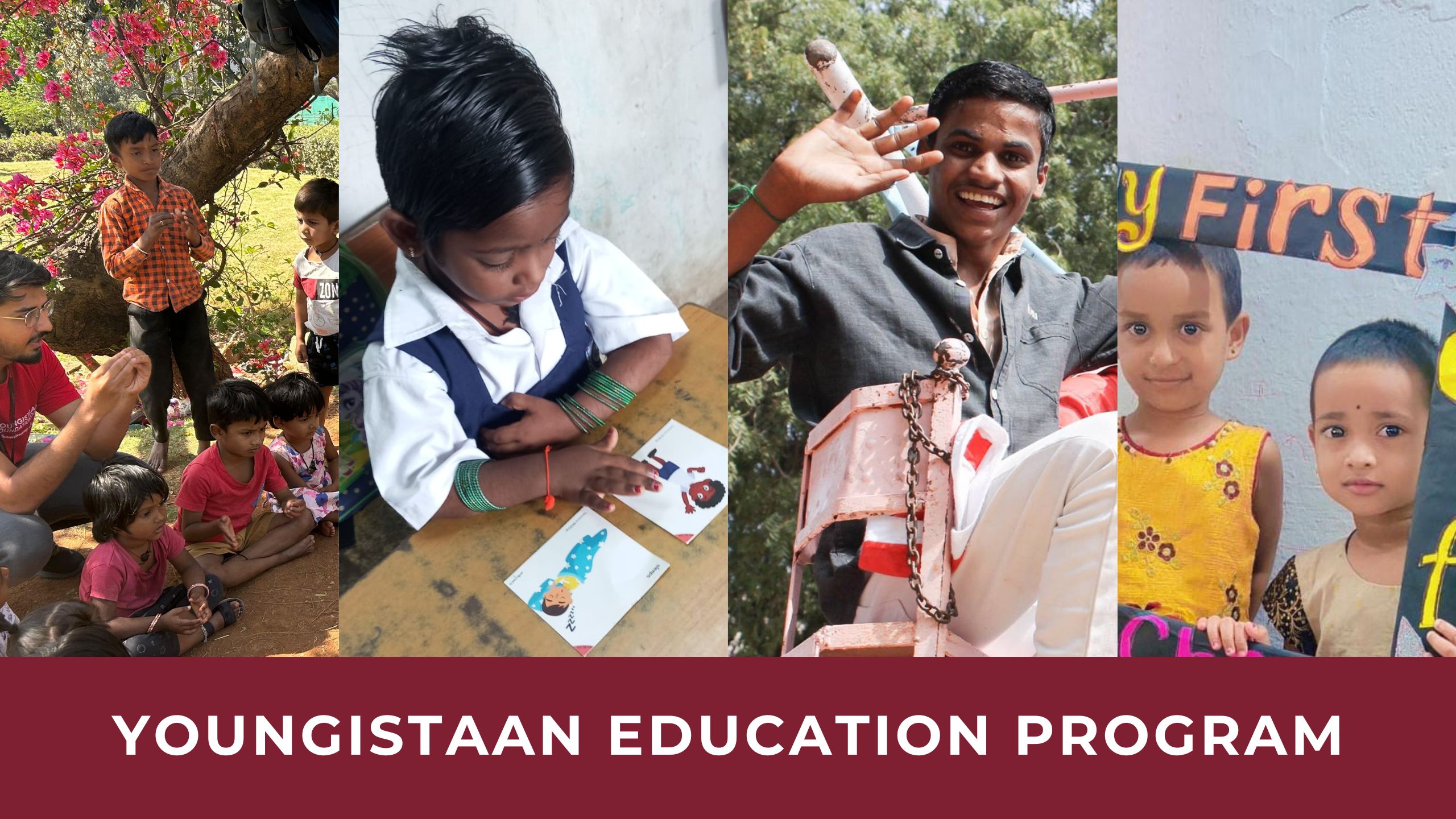
Youngistaan Foundation’s education initiatives are designed to support children from early childhood through adolescence, combining academic learning with socioemotional development, mentorship, and community engagement.
OUR EDUCATION APPROACH
Our education work follows the NEP 2020 developmental framework, recognizing that learning is a continuous process beginning in early childhood and extending through adolescence. The interventions focus on creating equitable learning environments that support cognitive, emotional, and social development at every stage.
Youngistaan Foundation implements two interconnected education interventions that ensure continuity in learning from early childhood to young adulthood.
1. JUGUNU – EARLY CHILDHOOD DEVELOPMENT
Age Group: 0–3 Years
Jugunu focuses on early childhood development during the first three years of life — a critical period for brain development, emotional security, and early learning foundations. The intervention works with young children and caregivers to support early stimulation, responsive caregiving, and age-appropriate developmental practices.
Through engagement with families, early educators, and community systems, Jugunu strengthens the foundations necessary for children to transition successfully into early learning environments such as Anganwadis and pre-primary classrooms.
Aligned with NEP 2020’s emphasis on Early Childhood Care and Education (ECCE), the intervention recognizes that strong early development significantly improves later learning outcomes.
Key Focus Areas
- Early stimulation and developmental support
- Responsive caregiving and parent engagement
- Early language exposure and communication
- Socio-emotional development
- School readiness foundations
- Awareness and capacity-building with caregivers and early educators
2. PATHASHALA – CONTINUUM OF LEARNING
Age Group: 0–19 Years
Pathashala provides a continuous learning and development pathway for children and adolescents, aligned with NEP 2020 stages. The intervention supports learners through different phases of growth, addressing academic, developmental, and socio-emotional needs at each stage.
Early Childhood (0–3 Years)
Support for early stimulation, caregiver engagement, and smooth transition into early learning environments.
Foundational Stage (3–6 Years)
ECCE interventions in Anganwadis, nursery, and pre-primary settings focusing on school readiness, play-based learning, early language development, and pre-numeracy skills.
Preparatory Stage (6–9 Years)
Strengthening foundational literacy and numeracy, reading comprehension, and learning confidence as children transition from learning to read to reading to learn.
Middle Stage – Children and Early Adolescents (9–14 Years)
Academic support and bridge learning to address learning gaps, strengthen conceptual understanding, and prevent disengagement from schooling.
Adolescent Stage (14–19 Years)
Focused engagement with adolescents to support continued education, identity formation, and life transitions. The program integrates academic mentoring with socio-emotional learning, leadership development, life skills, and exposure to pathways in higher education, livelihoods, and active citizenship.
Adolescent engagement recognizes that this stage is critical for decision-making, confidence-building, prevention of school dropout, and addressing risks such as early marriage, particularly among underserved communities.
Key Focus Areas
- Foundational literacy and numeracy support
- Academic mentoring and bridge learning
- Community-based learning spaces
- Socio-emotional learning and life skills
- Adolescent engagement and leadership development
- Career awareness and transition support
- Strengthening school and community engagement
OUR VISION
We envision learning spaces where children and young people feel safe to express themselves, ask questions, and actively participate in their learning journeys. Our goal is to nurture learners with strong foundations, confidence, and critical thinking abilities who can meaningfully engage with the world around them.
OUR MISSION
- Build authentic and culturally responsive relationships between children and mentors.
- Spark curiosity through meaningful and age-appropriate learning experiences.
- Recognize and support emotional and developmental needs across age groups.
- Address diverse learning levels through differentiated teaching approaches.
- Encourage sustained engagement within schools and communities to promote lifelong learning.
PROGRAM OBJECTIVES
- Strengthen foundational language and literacy skills enabling children to transition from learning to read to reading to learn.
- Build numeracy and logical reasoning skills applicable in everyday contexts.
- Foster socio-emotional competencies that support resilience, confidence, and collaboration.